Thursday, March 21, 2013

Post Oak Preserve

Turkey Vulture leaving pre-dawn roost at Post Oak Preserve
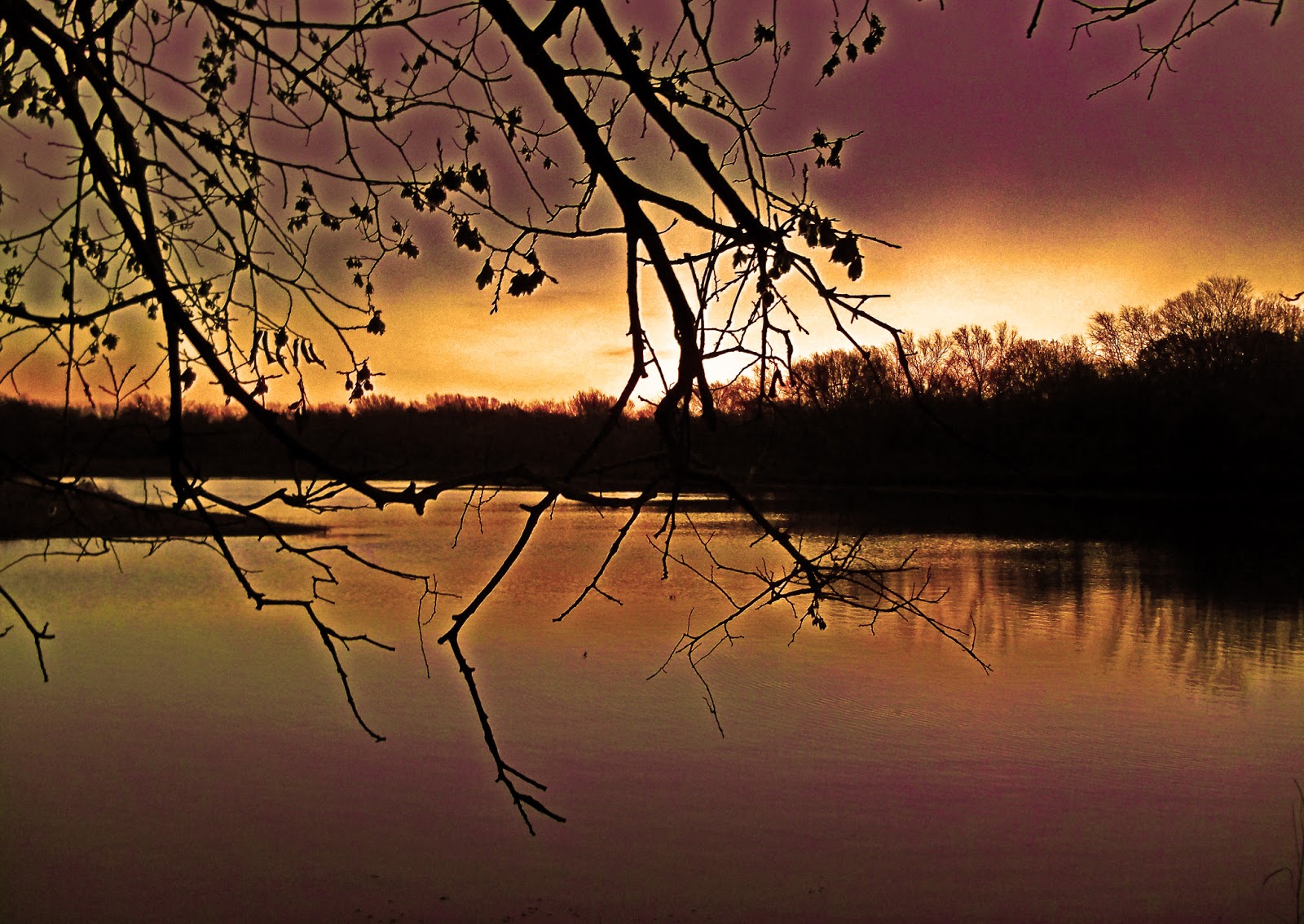
Awaiting the sunrise at Post Oak Preserve's lake
It's the last weekend of a Texas winter. In these parts we call it Windter. An extraordinary breezy time of year punctuated by the last throws of Arctic cold blue northers and strong southerly warm breezes off the Gulf.

Spring has sprung by now, slowly but surely. The lack of heavy winter rains has not left behind large stands of clover and early spring grasses on which many ranchers here in Southeast Dallas County rely on for livestock forage. It's a muted slow moving spring this year. The woods are thirsty.

With the pre-dawn skyline view of Dallas rapidly fading in the rear view mirror down 175 the goal is Post Oak Preserve south of Seagoville. A five to ten minute drive from the highway loops that ring Dallas, down into the old Post Oak Savannah that straddles the Main Fork and East Fork of the Trinity River.

Location: 1600 Bowers Road Seagoville Texas
Directions: From Dallas, take US175 south to the Seagoville Road/Kaufman Street exit. Make a right turn(south) on Environmental Way which turns into Bowers. The public parking for Post Oak Preserve is across the street from the DISD Environmental Learning Center.
Opened in 1993 the Post Oak Preserve is one of the largest Dallas County Preserves at 334 acres in size and features a 12 acre man made lake situated in the center of the property. The rolling terrain is punctuated by a small unnamed creek that bisects the preserve and feeds the lake.

Trails: Formal paved asphalt trails, formal dirt hiking trails and informal dirt hiking trails exist inside the preserve.
http://www.gmap-pedometer.com/?r=5857734


Points of interest are at the 1, 2 and 3 mile marks on the map. The route constitutes a matrix of all three trail types mentioned previously including moderate bushwhacking between mile 2 and 3.

Mile 1-top of dam
Mile 2-open native prairie
Mile 3-Trout Lilies

Background on the DISD Environmental Learning Center
The story behind the creation of the DISD Environmental Center is an interesting one. The center began in the 1970s, housed in a set of old buildings and barns which served as an outdoor interactive science lab for DISD students. The new facilities replacing the old were built in the mid-1990s as the result of a somewhat anonymous six million dollar donation stemming from an illegal dumping verdict.

A record fine was imposed by the Texas Water Commission in 1991 against Dal-Tile for a dozen years of dumping hazardous, lead-contaminated waste into two gravel pits in far southeastern Dallas County. The fine was the largest ever levied for environmental dumping by the state commission.

Dal-Tile, which used compounds containing lead to manufacture glazed ceramic tiles, was required by law to send contaminated wastes from the manufacturing process to special landfills but, according to the state investigation, dumped the material for 12 years, 1975-87, in pits that were not specially licensed for such purpose. State investigators also found that Dal-Tile used waste oils on nearby farmland for dust abatement, failed to notify the state it had discharged industrial solid wastes into water, and failed to keep records of the waste and file annual reports.  

Wee Folks' Trail
Dal-Tile the company was not the only entity held responsible, a federal grand jury indicted Robert Brittingham, Jr., and company president John Lomonaco on 17 criminal counts, including conspiracy to dump hazardous waste. Brittingham was found guilty in 1993, fined $4 million, and sentenced to five years' probation, which he began fulfilling with 15 hours a week in community service by financing and operating a $6 million lead-abatement program for Dallas. The total cost of the fines and dumpsite cleanup came to $16.5 million.

The DISD center at Post Oak Preserve was born/funded from that unfortunate episode. The new campus replaced the old dilapidated and cramped buildings that once sat on the site.

Soil and Conservation Lake #6
Post Oak Preserve's Lake from inlet of creek looking south towards Parson's Slough
 A large 12 acre lake serves as the centerpiece of Post Oak Preserve. This particular lake was build in the 1960s using federal and state money for soil and water conservation. The 1950s weather in North Texas was punctuated by a decade long drought cycle that left Dallas County in desperate need of water. Long term plans for increasing water supply, reservoirs and conservation led to a series of public works projects, one such being this lake.
Creek feeding the lake, lake just beyond the willow trees in foreground
This creek eventually feeds into Parson's Slough. The slough is one of the largest oxbows on the entire Trinity River. At one point in the past, within the last thousand or maybe even five hundred years ago, the Trinity ran within a couple thousand feet of Post Oak Preserve. Whether it was a large flood or log jam, the river jogged from it's traditional more easterly course to one much further to the west. The rich bottom lands and gravels left behind have served nature and man alike for centuries. Great fishing and hunting to be had in this area.


Fisherman's detritus along the shoreline suggests there are fish in the lake. The water is remarkably clear for a DFW area impoundment most likely the result of the sandy soil, high water table and lack of flooding from the nearby Trinity River.


The formal Lake Shore Trail is a little over 1/4 mile in length and begins at a picnic area on a small bluff overlooking the lake. It runs the west side of the lake before double backing upon itself to the asphalt trail. This short trail affords access to informal trails that stretch along the east side of the lake dominated by a high earthen dam.

The dam has a sloping backside to it and has seen heavy recent rooting by feral pigs. On this particular trip one feral hog in the 150 pound range was seen northeast of the lake.
Mallard duck shaking off water droplets as it takes flight


The lake serves as a great magnet for waterfowl. It appears that they spend their nights somewhere else and move into the lake at daybreak to feed.

Hunting is not allowed on the preserve and rules are strictly enforced.

The southeastern part of Dallas County barely skirts the flyway for migrating waterfowl rarely seen to the west. Snow Geese and Canada Geese flocks often make brief layovers in the old gravel quarry ponds that dot the landscape.


Trout Lilies -- The Western Part of the Preserve

Post Oak Preserve is most well known for the large population of Trout Lilies and Coralroot Orchids that bloom along a small creek just upstream from the inlet with the 12 acre lake.
Hundreds of thousands of Trout Lilies at Post Oak Preserve
The western half of the preserve is forested along a creek and is easy to reach using the asphalt trail and the Wee Folks' dirt trail that branches from it. Here the understory thins out in contrast to the greenbriar thicketed shoreline of the lake just out of view. Oak, cedar, ash and pecan dominate this lowland area.
Trout Lily at Post Oak Preserve
It should be noted that the trout lilies have a very short flowering and growing cycle, only ten weeks in length. A mid-march visit left only a few blooms to see. Many of the trout lilies in Post Oak Preserve have yet to reach full maturity, which takes seven growing seasons. In the coming years the number of flowering plants should increase many fold as a result. Veer left from the asphalt trail 1/4 mile to see the trout lilies.

Forest floor carpeted with trout lilies
Wildlife viewing blind

A series of wildlife viewing blinds have been built along the creek here, roughly 3 feet high and 20 feet in diameter. They give commanding views of the woods up and down the draw in which the small creek runs. Large amounts of deer scat in this area suggest a healthy Whitetail population forages in the woods here.


Native Grass Prairie and Post Oak Savannah --The Eastern Part of the Preserve

Native grasses at Post Oak Preserve
Moving east of the lake the formalized trails are non-existent and the preserve opens up into an open prairie environment dominated by stands of native prairie, cedar and cactus. Only the first hundred yards from the lake or the trout lily area are dominated by greenbriar(thorn thickets) before opening into more open ground.


Once out in the open the namesake of the preserve, the Post Oak Savannah become apparent. The post oaks form brakes and meadows inbetween over sandy soil that is rare for Dallas County. The Post Oak Savannah once stretched from East Texas into East Dallas. Very few examples are left, this is one.

If you have the eyes for it, a wanderer can pick up the faint trace of an old dirt road which leads up to a ranch gate on Seago Road.
Ranch gate on Seago Road

Seago was the original name for Seagoville, name taken from the town's founder T.K. Seago(1836-1904). He platted and developed the town just up the road from here on 200 acres at Kaufman Street and Old Seagoville Road now called US 175. The old highway was once called Kickapoo Trace, used by Native Americans, pioneers and eventually settlers moving from East Texas into the Three Forks of the Trinity area, now called DFW.
King's Fort Site, Republic of Texas, overlooking Trinity Riverbottoms
Matter of fact, if you drive just five minutes further down the road and claw up out of the river bottoms to a bluff, you'll find the old site of King's Fort, built when Texas was her own country. A commanding view of the Trinity Riverbottoms below it sits up high enough to see Downtown Dallas on a clear day.

It was from here that many of the famous surveys of Dallas County began in 1840 only to be turned back by fierce Indian encounters.

Travels from here have been well documented by men like Warren Ferris as told in Land is the Cry, Warren Angus Ferris, Pioneer Texas Surveyor and Founder of Dallas County and Edward Parkinson's accounts of travel with President Sam Houston and his Treaty Party Expedition to Dallas in 1843.

A worthwhile stop if you find yourself headed to First Monday.


Getting back to the preserve......

Painted Lady Butterfly on Mexican (Black) Cherry Tree, Post Oak Preserve
Some of the trees along the old dirt road here were most likely dumped, planted or volunteered themselves before the old gate blocking access was secured to the preserve. A couple examples of non-native trees like the cherry tree above and some Bradford Pear testify to that effect.

Texas Redbud at Post Oak Preserve
The dominant flowering tree here at Post Oak Preserve is the Texas Redbud Cercis canadensis var. texensis. A harbinger of spring, many old timers use the blooming of the redbud as a signal to plant crops or grab a fishing rod during the Sand Bass runs up area creeks.

Golden eye lichen (Teloschistes chrysophthalmus)
Fruticose (spore-producing) and Foliose (leafy)lichens on  a branch of a tree in the Post Oak Preserve. Lichens consist of a photosynthetic and fungus partner, either an alga or cyanobacteria, and can live in harsh environments where neither partner could survive or reproduce alone. This is a Golden eye lichen (Teloschistes chrysophthalmus).

Thursday, March 7, 2013

Texas Buckeye Trail - The Annual Buckeye Grove Tour


The Trinity River Buckeye Grove bathed in sunset overlooking the Trinity River, Dallas, Texas March 2013
One of the largest native flowering trees in Texas, the Texas Buckeye Tree Aesculus glabra var. arguta makes for one of the earliest and best shows of color in the state. The Great Trinity Forest holds prime examples of these species many in a special grove inside Rochester Park. Coinciding with the annual bloom of these trees is a free walking tour hosted by Master Naturalist Jim Flood. His website http://www.texasbuckeyetrail.org/ has details on guided hikes the second and third weekends of March 2013. Jim Flood's 2013 Buckeye Hike Schedule.
The Annual 2013 Buckeye Walks: 
Saturday March 9, 9am and 12 noon 
Sunday March 10, 9am and 12 noon 
Saturday March 16, 9am and 12 noon 
Sunday March 17, 9am and 12 noon 
Daylight Saving Time begins Sunday March 10 (spring forward) Scheduled Hikes dependent upon weather conditions.

These hikes in particular are really the only formal scheduled guided hikes inside the Great Trinity Forest that I'm aware of and only occur once a year. For those interested in learning more about the Trinity River, Great Trinity Forest and background on the area, this is the hike to take.

Location of trailhead:
Google Street map 6900 Bexar Street Dallas, Texas

Texas Buckeye Trail carpeted with flowering False Garlic Nothoscordum bivalve March 2013
Trail sign noting the Buckeye Grove Loop
Trail Beta: Bexar Street dead ends at the Rochester Park Levee, a small pavillion and trailhead kiosk are there. Cross a small ditch, up and over the levee, a decomposed granite trail surface leads to a concrete ADA compliant trail beyond. On the concrete trail, there are a series of round plaza areas with sandstone rock benches. Plexiglass/wood signs note the trail intersection to the natural paved path to the Buckeye Trail. The distance from the parking area to the Buckeye Grove is about 1/2 a mile one-way and makes for a 1 mile roundtrip. Trail is easy to walk, flat and other than a couple small tree trunks on the trail is easy to walk. What is called an 8 to 80 trail, anyone 8 years to 80 years could walk it alone.

The Path Less Traveled
Other less formal undefined trails (not part of the Buckeye Trail tour) lead away from the Buckeye Trail. One in particular that loosely follows the Trinity River to the mouth of White Rock Creek. Most recently written up in a post back in December the Bois d' Arc Trail. Below is the most complete map I have of trails in this area. Based on my own GPS data.
William Blair Park Trails


The Texas Buckeye
Texas Buckeye Aesculus glabra var. arguta
From the Texas Native Plants Database: Texas Buckeye has palmately compound leaves with seven to nine (sometimes eleven) leaflets, vs. the five leaflets of red buckeye. The flowers are creamy white to light yellow, appearing in terminal clusters after the leaves appear. The fruit, a leathery capsule with blunt spines, has one to three large shiny seeds. The seeds are known to be poisonous, and it is possible that all parts of the plant are as well. It tends to prematurely drop leaves in hot, droughty situations, due to leaf scorch and fungal diseases. Usually a small shrub or small tree, Texas buckeye reaches its largest size (more than 40 feet) in the hard limestone of the central Edwards Plateau, although it also occurs in the northern Blacklands, Cross Timbers and Prairies, Pineywoods, and Post Oak Savannah.


Texas Buckeye leaf


Flowering stages of a Texas Buckeye

Individual trees flower at different rates. Visiting the Buckeye Grove early in the process, the stages of flowering are readily evident as seen below.


Texas Buckeye in full bloom March 2013


A little background
Much of the land where Rochester Park/William Blair Park now sits was once a dairy farm.  Joseph Metzger, a Swiss immigrant and the founder of Metzger's Dairy, crossed into Texas holding his only possessions in a pack above his head while the Red River was at flood stage in 1875.Metzger proceeded to Dallas where he tried farming in the community of New Hope(Mesquite/Sunnyvale) in Dallas County. Not experiencing much success in that endeavor, he later worked for Chris Moser, one of the Southwest's first dairymen. In 1889 her rented a farm in the vicinity of North Carroll, Haskell and Ross Avenues where he began his own dairy with the purchase of 40 cows and a horse drawn milk wagon.   In 1893 Metzger began purchasing land within the old John M Crockett survey for the purposes of relocating his dairy. At that time 64 acres were purchased less 1.8 acres which were to be used as the county road known as Miller's Ferry Road. Thus began a succession of street names(later Holmes Street and Hutchins Road) for the street now known as Lamar Street. A deed dated February 28, 1893 and filed the same day describes the land as extending from west of the railroad to the river. Metzger continued to acquire parcels of land until 1904. After all purchases were made, the farm which became the home of Metzger's Dairy contained 159.6 acres

Metzger's dairy flourished and by 1909 was purchased by Joseph Metzger's sons Carl and David. In 1922 it was listed in the Dallas Directory as Metzger Brothers Sanitary Jersey Dairy. At the time the dairy was considered the largest and most modern in Texas. The first Dallas dairy to use glass bottles. Following World War II, the rapid expansion of Dallas led to an expansion of the facilities. The Metzger family involvement ended in 1984 with the sale of Metzger Dairy of Dallas to Borden.  This area is more recently noted for the large cache of Indian artifacts and Indian burials on the site. Seven sets of Indian remains have been found here. There are an estimated 34,000 Indian artifacts still at the site spanning thousands of years of human occupation. It has been nominated by a team of professional archeologists for inclusion on the National Register of Historic Places.


Ned Fritz
The late Ned Fritz is the man who deserves the credit for saving what we have left of the Trinity and was a champion at saving the Texas Buckeye Grove at William Blair Park in Dallas. He made his lasting mark on the Trinity with his efforts to keep the government from channelizing the Trinity from Dallas to the Gulf of Mexico in 1973. What he saw back then was a patchwork collection of old remnants of Trinity River bottom land when roughly cobbled together formed one of the largest urban parkland areas in the United States.


Friday, March 1, 2013

Catching The White Trout Lily Bloom


Trout Lily (Erythronium albidum) pollinated by bee, Gateway Park, Great Trinity Forest in Dallas, Texas
The metamorphosis of the winter woods to that of spring begins on the smallest of scale. For a very short period of time every year, a blink of an eye, the old patchwork of a now forgotten and paved over ecosystem comes to life. Before the Wild Plum or even the Red Bud, the isolated Trout Lily colonies hallmark a fitting beginning to a new season in the Texas woods.
Bobcat (Lynx rufus) hunting the open prairie in Dallas, Texas
Fossil embedded limestone hillsides of Dallas hide few secrets and bare their souls for the world to see. Terrace or slope might be a better descriptor for poor land that would scarcely feed a solitary goat. Soil to thin to plow for cotton or pasture for livestock, many of these wood breaked slopes remained free from development until the post war housing boom of the 1950s.

Here, free from flood and good shallow bedrock, Dallas built her residential subdivisions in the middle of century last. Just high enough to dodge the largest of floods but close enough to bottomland trees to enjoy filtered shade. The once worthless land became the high valued creek-lot backyards of the well heeled. With the homes came lot scraping construction, removing what was most likely near continuous colonies of trout lilies up and down the Trinity River drainage.
White Trout Lily, Dallas County, Texas
Like humans, the Trout Lily Erythronium albidum enjoys this transition zone too. The organically rich leaf strewn soils just inside the sun dappled treelines for a short few days become home to one of Texas most unique natural blooms.

7 Years To Produce A Flower
Known colonies of White Trout Lilies in Texas, 2010, USDA
 http://plants.usda.gov/java/county?state_name=Texas&statefips=48&symbol=ERAL9
White Trout Lily Flower
 Only 90 known colonies of White Trout Lilies are known to exist in the State of Texas in 15 counties. Trout Lilies, also called Dog-Tooth Violets or Adder's Tongues are a spring flowering woodland native to Texas. The flowers have 6 white tepals (inverted petals), 6 stamens and bright yellow anthers that hang downwards forming an inverted shape. Each plant is about 6 inches tall and roughly the diameter of a dinner plate. It takes 6 long growing seasons before a Trout Lily will produce a flower in year 7.


The "trout" namesake for the flower comes from the mottled appearance of the leaves which resemble the sides of a trout. The plants themselves make abrupt growth in winter, appearing almost overnight in some cases. Triggered by winter rains and warming soil, they begin their quest for reproduction in the latter half of February here in Texas.
Trout Lily in the Great Trinity Forest
The flowering cycle for the Trout Lily begins and ends very quickly, only a few days at most. The flowers are usually closed in the morning and open by mid-afternoon. The early bird does not get the worm if looking to photograph these colonies. Better to wait late in the day or towards sunset to see them fully open.
Trout Lily patch on Lower White Rock Creek, Great Trinity Forest, Dallas, Texas
The Trout Lily is unique in more ways that one. Pollinated by members of the bee family the seeds are scattered not by birds or wind but primarily by ants. Ants can carry the seeds some distance and will eat the husk at their antpile leaving the seed behind. 

Trout Lily pollination at Spring Creek Forest Preserve
The absence of nectar bearing flowers elsewhere makes the Trout Lily colonies a great place to see pollen laden bees in the winter. All bees appeared to be carrying their own body weight in Trout Lily Pollen.

At the Trout Lily Grove, White Rock Lake, Dallas, Texas

Bee collecting nectar from Trout Lily, Great Trinity Forest

The race from bulb to flower to seed completes in a ten weeks. Short by any measure. Shorter still is the actual flowering period that when given the length of time flowers are actually open, can be measure in hours. Rare and special to see.

Trout lilies take so many years to mature, so difficult for seed to spread, so hard to see in other times of the year that they have become a splintered subset of colonies here in the Dallas area. Separated by great distances in geography and existing in ecological isolation, TWU is conducting DNA sampling in the various colonies in Texas to determine their genetic structure.

Scientists note there are two main threats to the trout lily colonies here in the Dallas area. Threat of habitat loss by humans and the spread of the invasive Garlic Mustard (Alliaria petiolata). I would add especially in the Great Trinity Forest, the invasive Chinese Privet which is capable or choking out all beneath it. Visiting a few of these colonies most seem to be clear of encroaching invasive species, the exception being White Rock Lake where privet and honeysuckle are slowly making their move.

3D photo of a bee on a Trout Lily, Spring Creek Forest Preserve (3d glasses required)

If you stick around until the sun sets................

Star trail time exposure in the Great Trinity Forest, Dallas, Texas, Winter 2013

These open prairie fields are often interrupted by timber breaks and transition zones between open bare caliche and the floodplain timber below. The timber here is often rich in animal life far beyond what many expect. Were one to never visit or see it themselves they would never know.

With short days and long nights the woods down here along the White Rock Creek drainage give one great early evening foliage free viewing of the night predators.

Under the ghostly shadows of a February moon, the owls of these bottomlands come out to hunt prey as large as themselves.


In a rare comparison, the Trout Lily and Great Horned Owl share a common bond. Being first. The Great Horned Owl is one of the first birds to nest and rear young in the new year. Paired up and mating by New Year's Day, they bring young into the world earlier than others. Here, in these photos the male is actively hunting at night more than ever before in late February.

Male Great Horned Owl Dallas, Texas
Owl Jumping Sequence

Cat vs Bird
Great Horned Owl (Bubo virginianus) dismembering domestic house cat (Felis catus) backlit by the moon
Great Horned Owl (Bubo virginianus) Dallas, TX
Great Horned Owls will eat anything that does not kill them first. It has been rather impressive to see the sheer magnitude of animals that a Great Horned Owl is capable of taking down, in this case, a house cat.

The Great Horned Owl has no known natural enemies, is rumored to be immune to rabies and a whole host of diseases that vermin are known to carry. A true beast of a bird.


Barred Owl (Strix varia) Dallas, TX


The smaller native owl to this area is the Barred Owl, seen at right. Weighing in at a pound or two, they are smaller than a Great Horned Owl. They make up for it in the vocal department with blood curdling calls that fill the woods in the evenings around sunset.

Barred Owls are viciously territorial against other Barred Owls and make their presence known wherever they are.

Calls of the Great Horned Owl and Barred Owl, a comparison


A special thanks to some special people who shared their information on trout lilies in Dallas County with me, including some of their closely guarded secret spots: Tom Frey, Landscape Architect for the City of Garland; Bill Holston, Master Naturalist; Hal and Ted Barker, preservation advocates for White Rock Lake; Jim Flood, Master Naturalist.

Note: Jim Flood is hosting a series of Buckeye Trail hikes in the coming weeks listed on his website: http://www.texasbuckeyetrail.org/hikes2013.html

Great Trinity Forest Trout Lilies, Dallas, Texas