Tuesday, June 17, 2014

Scissor-tailed Flycatchers and Kingbirds In Texas Trinity River Corridor

Texas Bird of Paradise, the Scissor Tailed Flycatcher perched on an Arkansas Yucca surrounded by Prairie Coneflower and other native wildflowers in Dallas, Texas

The strong southerly winds of a Texas spring bring more than humidity up from the Gulf of Mexico. Riding the air currents north from as far away as the tropical rainforests of Central and South America are the flycatchers of the bird world.
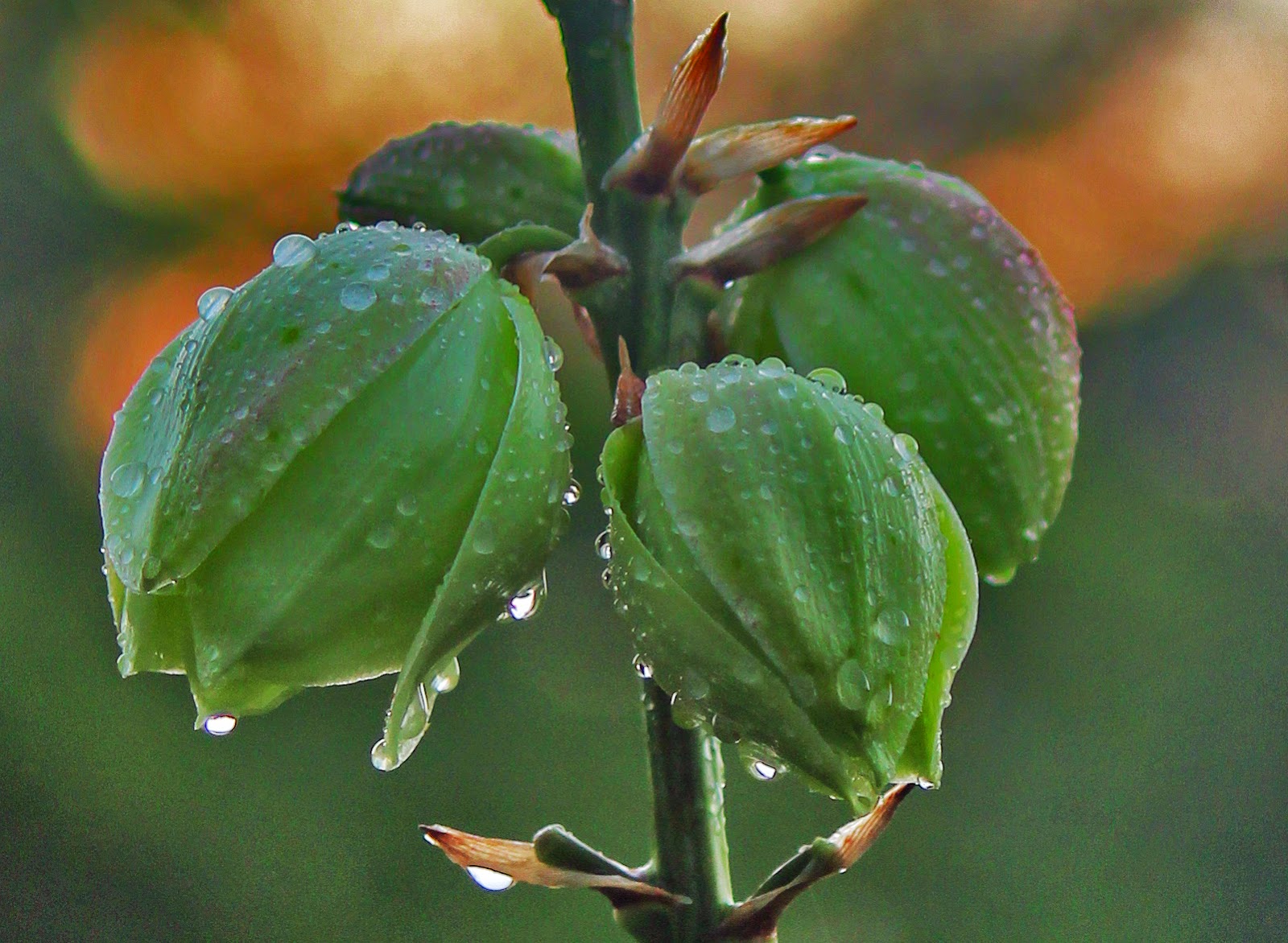
The dripping wet blossoms of an native Arkansas Yucca just after an spring thunderstorm at McCommas Bluff Preserve, Dallas Texas, Spring 2014
Scissor-tailed Flycatcher at the Mockingbird-Westmoreland Bridge in the Trinity River Floodway, Dallas, Texas. Downtown Dallas and Victory Park can be seen in the distance
The flycatchers are fond of the open spaces and fence lines of the Trinity River. In the late Spring, June to be precise, the birds move into Dallas in great numbers setting up shop among high insect populations that dominate the fields here. The three most dominant species seen are the Scissor-Tailed Flycatcher, the Eastern Kingbird and Western Kingbird. The Trinity River Corridor serves as a great overlap for the Kingbird species with near equal amounts of both Eastern and Western species.

Scissor-Tailed Flycatcher Tyrannus forficatus
The Scissor-Tailed Flycatcher Tyrannus forficatus is known by other names as well... Scissortail, Texas Bird-of-Paradise and Swallow-Tailed Flycatcher.


From the appearance, it is obvious how the bird acquired its common names, but its former Latin name - Muscivora forficata, describes the bird in even grander terms. Muscivora derives from the Latin word for "fly" (musca) and "to devour" (vorare), while Forficata comes from forfex, or scissors. The scissortail now is a member of the genus Tyrannus, or "tyrant-like flycatchers."

Strong willed and fearless, the best comparison one can make to such a bird is the familiar Mockingbird who also readily defends territory, nest sites and has a qualification for fighting dirty. 


Scissor-Tailed Flycatcher perched high above an endless meadow of coneflowers near Piedmont Ridge Trail in the Great Trinity Forest
Scissor-Tailed Flycatchers hunt by sight and by ambush. Many see Scissortails lining barbed wire fences, telephone lines or even road signs. Those artificial perches afford great over watch of a field.

The photos here were taken entirely in wildscape. Meadows, fields and treelines along the Trinity River and in East/Southeast Dallas along lower White Rock Creek in an area called the Great Trinity Forest.
So many know White Rock Creek as it moves through North Dallas but so few ever see it beyond the outfall of the White Rock Lake Spillway where the creek slows, the trees get larger and the scenery much more photogenic.
A good look at a departing Texas Bird of Paradise, the Scissor-Tailed Flycatcher in full breeding plumage


Scissor-Tailed Flycatcher Attack Sequence On a Red-Tailed Hawk

Scissor-Tailed Flycatcher moves in on a trespassing Red Tailed Hawk
In some areas like the Trinity River Floodway, perches and tree cover for nesting sites are scarce. This is an area between the levees near the Industrial District and Downtown where lone Cottonwood and Pecan trees dot the landscape. They are the usual haunts of resident Red Tailed Hawks year round. When flycatchers come in to nest, there will be many nests in one tree as habitat is a premium. That leads to conflict and dramatic attacks result.


Red Tailed Hawks will actually prey on nests of other species. Documented cases of nestlings being eaten by hawks are well known. The Scissortail goes the extra mile to make a point with the Red Tailed Hawk in this photo, delivering what appears to be a quite painful strike to the back of the hawk's neck.
Contact with the hawk, the Scissortail is riding the hawk like a winged horse


The hawk screams in pain and maybe disbelief as the plucky Scissortail unleashes an aerial assault. Note the long Scissortail on the back of the hawk


Splash one hawk. The Scissortail returns to his nest.


This genus earned its name because several species are extremely aggressive on their breeding territories, where they will attack larger birds such as crows, hawks and even owls. Beautiful and ounce for ounce some of the heaviest hitters among Texas birds.


Rarely documented mirroring mating dance behavior of Scissor-tailed Flycatchers

Scissor-tailed flycatchers are easily identified by their long, scissor-like tail, which may reach nine inches in length. During flight, the bird opens and shuts its taillike a pair of scissors and folds or closes the "scissors" when perching. Since the bird is only 12 inches long, its tail is proportionately longer than any other Texas bird including Roadrunners.

The signature call of the Scissortail

Scissor-tailed flycatchers are considered Neotropical migrants birds that spend their winters in Central and South America, returning to North America to nest and raise young.

As a rule, scissortails are seen in Texas from early April to late October, though individuals occasionally are seen during the last week of March and some birds linger until mid-November.

Most likely their residency in Texas is tied to the first killing frosts of the Fall, which diminishes food supplies for the birds.
The scissortail is one of the earliest summer birds to arrive each spring. Across most of the Trinity River Corridor, Dallasites can begin looking for them during the first week in April. Their limited nesting range is primarily concentrated in the southern Great Plains states, from New Mexico to Louisiana and Nebraska southward to southern Texas and adjoining areas of Northern Mexico. However, the birds have wandered and documented as far north as Hudson Bay in Canada.
The brilliant colors of a Scissortail in near perfect light of a Texas sunset

The nape of the scissortail's neck and back are pearl gray, and the breast is white. Wings are smoke coal black with a touch of crimson at the shoulders while the sides and wing linings are pink. Females usually are shorter than males because her tail is not as long.

Breeding pair of Scissortail Flycatchers riding the stiff wind currents on the evening of June 16, 2014


A Scissortail bounds of the perch of a yucca to attack an unsuspecting insect below


Scissor-Tailed Flycatcher nest with four nestlings, June 13, 2014
The nesting habits for the Scissor-tailed Flycatcher include a small diamter stick nest lined with soft fiber material in an isolated tree where three to five eggs are laid. The female builds the nest and the male often adds the fiber material during the building process.
A Walking Stick becomes dinner for a Scissor-tailed Flycatcher nestling
Both parents work all day long to feed the nestlings. Moths, butterflies, June Bugs, grasshoppers and even Walking Sticks are standard table fare at these nests. 2014 seems to be a particularly banner year for these insects. Walking Sticks consume the foliage of oaks and other hardwoods. Severe outbreaks of the walking stick, Diapheromera femorata, have been documented in the Ouachita Mountains of Arkansas and Oklahoma. The insects eat the entire leaf blade. In the event of heavy outbreaks, entire stands of trees can be completely ravaged. Continuous defoliation over several years often results in the death of the tree. Birds like flycatchers help control the population of these insects.
Adult flycatcher removing waste from the nest site


Arkansas Yucca Yucca arkansana-- Photogenic Perch For Flycatchers

Native Yucca  in the brilliant sunset light growing on the bluff tops of the Trinity Forest
As a rule we think of Yucca as desert fare, but it is a common Texas plant often seen in undisturbed areas along the bluff tops of the Trinity River and White Rock Escarpment running through the Great Trinity Forest.

One  of the smallest yucca in Texas, Arkansas Yucca ranges from South Central to North Central Texas, into Oklahoma and Arkansas, preferring chalky pan soil on rocky hillsides and prairies. It has asymmetrical rosettes in small open groups.

Like most yucca, the leaves are bluish-green to yellowish-green with white margins and curly threads on the margin.

As is, the "stem" of the yucca looks woody (it has to be strong to support that mass of blooms.) Dead yucca leave a strong supporting "stick" for lack of a better term.  These particular groupings stand tall above the wildflowers, from 3 to 4 feet standard. 

There are over two dozen US species of these plants, much more widely distributed than agave, ranging across the Midwest, Great Plains and all the eastern states in addition to the south, in mixed environments including deserts, grassland, mountains and coastal scrub.

Yucca also extend through Mexico towards Central America. All species have the capability to grow tall and branch, though in some arid locations this does not happen, and the plants remain compact and single. Flowers are white and bell-shaped, growing in a great mass on a shortish stalk; they are usually produced once a year though may not appear if weather conditions are unfavorable.

Eastern Kingbird Tyrannus tyrannus
Eastern Kingbird Tyrannus tyrannus as seen hunting for insects among a grouping of wild Prairie Coneflower along a limestone escarpment along Lower White Rock Creek, Dallas Texas, 2014
The dressed to kill flycatcher of the Great Trinity Forest accolades go to that of the Eastern Kingbird Tyrannus tyrannus. A bird dressed in a tuxedo with fine lines and a descriptive ability to crush any and all insects that venture near.

The kingbird is easy to identify from other flycatchers with its contrasting black back and white chest, giving it the appearance of wearing formal dinner attire.  The black tail is tipped in white, making it easily recognizable. 

Black and white is not really the norm for flycatchers and songbirds. The Eastern Kingbird is unique in this way. Reds and yellows are more common.  But for what he lacks in color and song, he compensates for nicely in presentation and style.

An Eastern Kingbird weighs down an already blossom laden and top heavy Arkansas Yucca
Eastern kingbirds are flycatchers, which is considered the largest family of birds on Earth, with over 400 species.  The Eastern Kingbird exhibits that classic flycatcher silhouette, complete with the slight crown or ruffled head that is common among other flycatchers such as phoebes, wood pewees and so on.

Caught in mid air, an Eastern Kingbird hovers like a hawk in an effective technique to spook insects out of a hiding spot

Eastern Kingbirds also exhibit typical flycatcher behavior, called sallying, where they fly out from a perch in pursuit of flying insects, and then often returning back to the same perch (also called hawking). 

They feed mainly on insects during breeding season, but oddly enough, during migration and on their wintering grounds in South America, kingbirds change personalities and behave almost docile,  flying around in flocks, feeding on mainly fruit.
While as large as a Mockingbird and with similar colors, the Eastern Kingbird has a more robust and stockier build

Western Kingbird Tyrannus verticalis
One of the most common birds to spot in the Great Trinity Forest in spring are the hearty Western Kingbirds Tyrannus verticalis. From prairie areas of the Lower Chain of Wetlands to the deep swamps of Rochester Parks, these birds are visible at every turn from dawn to dusk.

Before the pioneer settlement of the Southern Plains the Western Kingbird range undoubtedly was restricted by the lack of advantageous perches in otherwise prime open country habitat.  Its range in Texas in the early 1900s was the western part of the state encompassing  the Panhandle, southern plains, and the mountains west and south of the Pecos River Valley.


Since the early 20th century, man’s opening of woodlands for timber harvest/farming, planting of trees on the plains, and construction of power lines, and other structures which accompanied settlement have facilitated expansion of Western Kingbird breeding range.

Nesting had spread by the mid 20th century east to Austin and by the late 1960s to the upper Texas coast.  By the early 1970s they were nesting in the Dallas Fort Worth area.
Western Kingbirds migrate from Central America to breed across the western United States during the spring and summer months--about April through the end of August/early September.

They leave their breeding grounds relatively early and are generally not seen in the western states from about mid-September through early May. They tend to be viewed around farms, meadows, and along fence rows near dry open fields with scattered trees and brush.


Western Kingbirds are members of the flycatcher family and are often seen hunting insects from fences and small bushes and trees along roadsides. They are about 9 inches long with a wingspan of about 16 inches. They have gray heads and chests, thick dark bills, yellow bellies, and dark tails with white edges. They can be aggressive and often harass large raptors

Western Kingbirds on guard


Just like Scissortailed Flycatchers, the Western Kingbird readily defends nest sites, habitat and favored trees from any predator or competing bird species. The telltale flash of yellow as the beat through the high grass is an easy way to spot these birds which very much resemble the Eastern Kingbirds, a distant cousin.


Sunday, June 8, 2014

Great Trinity Forest and the Big Swamp

Sabal minor palms growing on the floor detritus of the Great Trinity Forest, Dallas Texas, June 7, 2014
The deepest part of the Great Trinity Forest lies here. One that is rarely if ever visited by humans. The lair of water moccasins, snakes hanging from trees, snorting feral hogs, spiders the size of your hand and chest high poison ivy. We were greeted by all of that fifty feet from the road. We had miles to explore beyond into the only known stand of palms growing in Dallas. A special and fragile place protected by impossible terrain and veiled secrecy on the location.

Master Naturalist Bill Holston moving through a shaft of early morning light in the otherwise dense and dark forest
 
Flash required to highlight the flowering stems of the palm

Dark. Even on the brightest of June mornings. The sun's rays strain to reach under the double dappled canopies of mature pecans, walnuts and oaks. The exceptional experience is one that would one would think to be found afar from Dallas. Maybe Big Thicket or swamps on the Sabine hold such caliginous and musky spots. No. It exists inside the city limits. Fitting that such a place holds the most biodiversity in the Great Trinity Forest. One of the more unique species found here, an outlier species that defies the status quo is the Sabal minor palm.

The Sabal minor, the Dwarf Palmetto, is an understory palm generally occurring in low-lying, swampy habitats. Sabal minor occurs from Southeastern Oklahoma and Texas eastward to Florida and North Carolina. It is a wetland species that thrives in swamps, floodplains and backwater regions of the southeast where the land is often inundated by prolonged periods of water.

Budding flowers on a Sabal minor, Great Trinity Forest, Dallas Texas, June 7, 2014
Three foot long flower stalks appear this time of year, covered with small, yellow-white, fragrant flowers  The flowers are followed by small berries that ripen August through October. The berries ripen from green to black on a branched cluster shorter than the leaves. Flowering and fruiting are not necessarily annual events, and some years see more abundant flowering than others. Even when flowering is abundant, fruit production is erratic; the causes are unknown.
Sean Fitzgerald works through the bright sun and very dark shadows which is uncommon in North Central Texas

Sabal Arecaceae constitutes sixteen species of palms that are distributed in the eastern woodlands and coastal plains of the Southeastern United States. Spanish explorers who landed on what is now the Gulf coasts of the United States immediately noticed the “palmito” or little palms growing everywhere. The “palmetto” name has since been applied in common names to these small palms.


Sabal minor dwarf palmetto or swamp palmetto has a solitary subterranean(underground) stem and rarely seen above ground in North Texas with 4–10 dark green leaves. It is thought that the trunks are subsurface to aid in protection from freezing cold weather and frozen conditions. Hardier than many palms, these plants have endured countless cold snaps and ice storms that few of their southern counterparts will ever experience. These plants made it through some of the coldest winter weather conditions that North Texas has experienced in many years. The cold weather of December 2013 sent temperatures in Dallas into the near single digits for days. Cold hardy and the ability to thrive in extremes make the plants here a special and unique colony.

Biologist Scott Hudson and Photographer Sean Fitzgerald checking out feral hog damage in an ephemeral section of swamp, dried after recent rains in May


A mushroom growing up through a decayed pecan limb on the forest floor

Honeybee hive in a Bois d' Arc tree
Years of fallen leaf litter, branches and storm debris cover the ground in this area. This type of wet and dark environment provides the ideal conditions for fungus species to thrive on the slowly decaying material.

A number of larger trees here have voids in them. Seen at left, a large honey bee colony has built a hive about 8 feet up in a cavity of a Bois d' Arc tree. Many Bois 'd Arc trees exist in this area. Tough and resistant to nearly all diseases, they can live centuries in the riverbottoms under ideal conditions. These trees prefer a slightly higher elevation just out of the immediate floodplain on slightly drier ground.

Red bellied woodpecker in a cedar elm
Other species of trees found in this area include pioneer species like ash and cedar elm.


The Red-bellied Woodpecker is a familiar year round resident of forests in the eastern half the United States  It is a bird of densely wooded lowlands and bottomlands, open forests and swamps. It too uses the voids and cavities of trees. The bee hive and the woodpecker seen in the photos here were taken within 100 feet of one another.


Engaging the formal swamp
Acres and acres of snake filled swamp that we slogged though
Ankle deep water in the flooded sedge, acres of it
The goal for this hike was to push through the Sabal minor groves, ash bottom and pockets of heavy ragweed to reach the immense and large water bodies we hope will hold tropical wading birds later in the summer.

Lots of over banking events this spring have created ideal aquatic habitat and food for wading birds, snakes and frogs. Getting there requires wading through flooded aquatic grasses that are prime habitat for water moccasins and alligators. Called sedge, this aquatic grass in the lifeblood of environments like this.

Black Crowned Night Heron in a pocket pool surrounded by sedge

In Texas, there are over 100 species of sedges and they are difficult to identify without using detailed botanical indexes. In general, sedges are perennial plants that resemble grass, grow in shallow water or damp soils, and can reach 3-4 feet in height. Sedges often grow in thick clusters called tussocks.

Submerged portions of all aquatic plants provide habitats for many micro and macro invertebrates. These invertebrates in turn are used as food by fish and other wildlife species (e.g. amphibians, reptiles, ducks, etc.). After aquatic plants die, their decomposition by bacteria and fungi provides food for many aquatic invertebrates. Sedges are considered good wildlife plants. Sedges are grazed by muskrats, nutria, and rabbits, while the seeds are consumed by waterfowl and small birds.

Panorama of open water, Great Trinity Forest
The sedge and willows break open into the bright brilliant light of a true swamp with beaver built islands, beaver slides, copses of willow studded islands and high tree canopies that line the water's edge for hundreds of yards.
A first look at a promising site for dispersal birds later in the summer. Left to right, Sean Fitzgerald, Bill Holston, Scott Hudson. Scott with the field glasses is observing a Yellow Crowned Night Heron on the opposing shore
Tri-colored Heron with a sunfish
There is a certain recipe for attracting wading birds to bodies of water. The ideal conditions are lots of food, shallow water, good cover and a secluded environment from predators. This unnamed body of water meets all those criteria and more.

Great Egret in breeding plumage, note the neon green around the nose
The difficult wading hike to make it here for a human is actually a great asset to one wanting to observe wildlife. Other bodies of water similar to this like Lemmon Lake in Joppa Preserve, require a long slow belly crawl across grass to reach the shoreline. Here, at this location, the dense treeline all but obscures a person for wildlife viewing up close.
Checking out the water depth and making mental field notes
High quality habitat like this is very rare in Dallas. It attracts birds seldom seem in other places in town. The area acts as an incubator for many animal species to raise their young, it was clearly evident that birds, especially the Yellow Crowned Night Heron had a nearby rookery.
Yellow Crowned Night Heron
Rough Green Snake in an Oak
Rough green snakes are typically found on forest edges near ponds or lakes. Although they are arboreal snakes, they forage in dense vegetation along pond and lake shorelines during the day. Nights are spent coiled in the branches of trees. Rough green snakes choose perches based on distance from water sources, height in branches, and thickness of the branch.


Some Birds Of The Swamp
Tri-colored Heron, Snowy Egret and White Ibis, Great Trinity Forest, June 7, 2014
Three birds featured above, all wading birds of near similar size and height with all very different methods of catching prey.

Perhaps a decade ago, the sight of a White Ibis was a rare occurrence in Dallas. Same with the Tri-Colored Herons who, even today still exist on ornithological range maps as birds of the Gulf estuaries and Louisiana swamps.


White Ibis foraging for food
This spot is so remote and so unexpected to have humans visit that we were able to spend a long length of time inside the shade of the trees observing not only the feeding habits of these birds but watching many of the birds fly directly over our heads and land directly in front of us, 20-30 feet away.

Snowy Egret
When foraging, the Snowy Egret walks upright with the neck slightly arched, and it flies strongly with deep wing beats, the yellow feet visibly trailing behind the body. It is an extremely vocal heron, particularly during aggressive encounters, when a characteristic “rah” call is emitted.The Snowy Egret will often shake their legs and feet, agitating the water and mud to stir up prey underneath.

Snowy Egret prowling for prey

Juvenile Little Blue Heron
The snowy egret is often confused with the juvenile Little Blue Heron (Egretta caerulea), but may be distinguished by the pure white tips on the wing feathers, the solid black bill and the bright yellow feet, which give the impression that the bird is wearing gloves.

Green Heron
The Green Heron is sometimes called the Green-Backed Heron. It is a smallish heron that is about the size of a large crow. It is a foot and a half to two feet in length. The Green Heron has a dark head with a small black crest. Its back and wings are dark gray-green to dark gray-blue. Its neck is rust colored. It has a dark bill and its legs are orange or yellow. Elusive little birds that are very hard to photograph in flight.


Yellow Crowned Night Heron

The Yellow-Crowned Night Heron is a migratory bird that resides here along the Trinity River in Texas  Unlike other night heron species, the yellow-crowned forages both late in the day and night. It forages much like other herons by wading through water waiting for its prey to come within striking distance. Also, unlike the great heron which many have seen standing motionless like a statue in many Texas waters, the yellow-crowned will stir up its quarry by wading briskly at the waters edge. With a quick dancing motion, the dagger like bill stabs its prey.  The prey of a Yellow-Crowned Night Heron normally consists of fish, frogs, grasshoppers, and occasionally snakes, but its primary diet is crustaceans.

Juvenile Yellow Crowned Night Heron on the branch of a willow

Tri-colored Heron
The Tri-colored Heron's signature movements, aesthetic features and picturesque plumage draw it apart from the other birds. The Tri-colored Heron's color is a slate blue/dark blue gray color. It has light greenish/yellowish legs and the color on the beak matches its legs. It also has a white stripe on its purple neck. The heron's white belly gives it its unique identity. It is named the Tricolored Heron because of these three different shades.

It is the only dark colored bird with a white underbelly in the heron family. The Tri-colored Heron usually measures a little over two feet in length and has a little over three foot wingspan.

White Ibis

Because they require shallow water for feeding, many white ibises are found in coastal, aquatic environments such as ponds and lakes or inland wetlands. White Ibises are primarily found in southern coastal regions of the Gulf states and during the summer and move inland after the breeding and nesting seasons. Called "dispersal", the wading birds head inland from the coast in search of slowly drying ponds and beds. Because water depth is of the upmost importance for their feeding and reproductive behaviors, White Ibises may shift locations due to the rise and fall of water levels.

White Ibis in the Great Trinity Forest June 7, 2014