Monday, May 6, 2013

Preserving Ancient Dallas -- Help Protect Big Spring and Ancient Caddo Sites in the Great Trinity Forest

The pure crystal clear aquifer water of Historic Big Spring as it freely flows in Dallas, Texas
Well, is it time to start worrying about the fate of Big Spring and the land around it? It's looking that way. So rare is it to find a place like this in Dallas. A perfect balance of natural beauty and deep history all rolled into one. One of the only natural springs in Dallas,  Big Spring flows at a steady 68-70 degrees year round with crystal clear and clean water. The land surrounding it features centuries old trees and a large Native American archeological site known as 41DL72. Many are worried for the place. Nearby development for the Trinity River Project threatens the spring and Native American sites in more ways than one. Despite assurances by the city that the area will be protected, many people are becoming very concerned that the city does not have the best interests of this jewel of a place in mind. I'm worried. You should be too. 

I preface the post here with a link that Ted Barker has been kind enough to setup:

https://www.facebook.com/SavePembertonsBigSpring

A number of very fine researchers should be periodically updating information on what they find in regards to future design and plans. I think that Facebook page would serve as a great reference point to keep abreast of the ongoing effort. 

I have met the future Horse Park tenants face to face and they all seem like nice people. I think it would be fair to say they are pillars of our community and hope to make the Texas Horse Park an asset to the community. In no way is any of this directed towards them. I made a point of telling everyone involved in this that the Horse Park folks all seem like nice people. I value handshakes and straight talk and if they are being truthful with me than I support them 100%.

Raising Awareness
You might think, Ted Barker the Save Winfrey Point at White Rock Lake guy? Yes. Saving the spring site and the ancient archeological site around it has brought together the very best Dallas has to offer in natural preservation. For decades there has been like minded private citizens working to preserve the Trinity River and other like minded folks working to preserve White Rock Lake. They knew each other loosely by name, articles in the paper or by professional association. Few have ever met. That changed in late April. Separated by only a few miles up and down White Rock Creek I have wondered why a meeting of the minds has not happened sooner.

Big names. A bunch of well respected, well liked, well spoken and scientific type folks in their approach to all this. You'd recognize many names if you subscribe to the morning paper or own a television. Good folks. No t-shirts. No weird agenda. Just concerned citizens. I think that on their own, each one of those nice people could probably command an audience to hear their ideas. Having them together in one place was just fascinating to see. I'm very grateful to each one that attended.
Underwater video of the spring showing the wide diversity of Mosquitofish and Crayfish that live in the spring.  

It's important to get the word out about this place. There is only one site like it in Texas. The obscurity of the spring and surrounding area has kept it from being developed and protected it. Now that obscurity is working against it as some are unaware of the immense cultural value a place like this affords.


Big Spring in the Great Trinity Forest, May 2013

Preservation Of An Endangered Resource -- A 171 Year Family Legacy
The faint breeze of change rarely blows across some parts of Dallas.  In a city that prides itself on innovation, reinvention and development the history of the land upon which Dallas was built is mostly forgotten. It was the generations of our forefathers that carved out the land, tamed the river and paved the roads. In their twilight years I think many looked back on the old times before all that happened, longing for that simpler time. If they had to do it again, standing at the fork in the road, they would have done it different. Just to see the entirety of it all. As a whole. Horizon to horizon. In so many of those cases what has been done cannot be undone.
Mrs John Neely Bryan at her home at Big Spring circa 1867-77

We tell ourselves that it's not our fault as present day Dallasites. We tell ourselves that in this day and age it could not happen. Who would dare. Are we at a fork in our own road with the Trinity River Project? Headed the right direction? Where are we headed anyway?


Sam Beeman, Mrs John Neely Bryan Sr, John N Bryan Jr


That ravaging of the land never happened here at Big Spring. The pioneers that settled on White Rock saw the spring and land down here as an invaluable resource. Like much of the Great Trinity Forest this land was settled by the Beeman family. Granted 4th class headright by the Republic of Texas in November of 1842 and settled in April of 1842. John Neely Bryan, founder of Dallas, Texas married Margaret Beeman and later inherited the "Spring Tract" on which they lived for a number of years.


Margaret Beeman Bryan(Mrs John Neely Bryan) sold the land in 1880 to Edward Case Pemberton. That land was kept in the family until just recently when it was sold to the City of Dallas for parkland. The background of the historic Pemberton Farm are in a couple previous posts from 2011 and 2012 Where the red fern looking stuff grows and Hiking in the Footsteps of Sam Houston and Billy Ray. There is so much more to the histories of the Beeman, Bryan and Pemberton families than I could ever describe here on the internet. The family stories handed down through the generations are epic, the hard won fight to build a life out of nothing but rough hewn frontier. They did it. Right there.
Grandsons of the pioneers: Grandson of EC Pemberton, Bill Pemberton(left); Great Grandson of John Beeman, MC Toyer(right)
Descendants of those families both have a great interest in seeing Big Spring and their old family sites preserved. It's an honor to be on a first name basis with both Mr Pemberton and Mr Toyer, both of whom represent two families and 171 years of family heritage on White Rock Creek. At Big Spring itself. Mr Toyer is a real asset to the city. As a noted historian, he has done a tremendous amount of research on Dallas history including the deep history of the pioneer families who settled Dallas County. He has all the documentation needed to pursue a pair of Texas Historical Markers and the last time I spoke with him plans were to get the documentation submitted for at least one, in the 2014 selection process.


Accountability
Strange and unexplained things are afoot. Compounded by a worry that a rare piece of natural Dallas, a unique piece of Texas history might be lost forever. The past few months, exploratory drilling and surveying has been done above the Big Spring site. The type of activity that signals future construction. The strange part of it all is that the City of Dallas has assured many that no construction is planned there as they recognize it as a historic site and a registered Caddo Pre-historic site. The site is registered with the Texas Historical Commission and is noted on published archeological maps, surveys and in printed peer reviewed material. The map to the right is from a published 2009 survey noting the vast expanse of area where archeological artifacts were found. The black dots indicate positive finds. There is so much more there that has yet to be discovered.


Archeologist Tim Dalbey discussing the Caddo artifacts at our feet


Core Drilling at one of the Caddo sites
As a snapshot example of what is being seen, the recent January 2013 core drilling around a known portion of an archeological site. Total mystery why it would be done there. Unless of course you plan on constructing a building. That crew ended up spilling a bunch of fuel or hydraulic fluid out there killing the winter grass. Oops!

Hey Look, Dallas Own Little Temporary Llano Estacado!
Public Works and Transportation employees with a fancy GPS tool, planting stakes

Fast forward to April staking by the Dallas Public Works and Transportation Department with a series of stakes marked "barn" and "arena". Strange how that happened. I was shocked to see the stakes. After assurances that no buildings would go up in this area. I did an Open Records Request for more information.


Survey stake labeled "Arena Corner" placed by Dallas Public Works and Transportation Department Survey Crew, April 2013 near the head of Big Spring
"Our survey party was performing a survey in support of the Great Trinity Forest Planned Development District.  That PD covers an area from the Trinity, to the South, up to Highway 175, to the North, and West from Pemberton Hill Road to encompass the old Sleepy Hollow Golf Course.  It consists of approximately 2,200 acres, and will be sorted into seven (7) very large addition plats." 
Barn corner

I called the number provided the next day and spoke to the Survey Manager who sent that response. He said that the stakes were placed in error and that his professional surveyors were off 800-1000 feet in their location. Going further, he said it was a consultant who gave the city the coordinates which were extrapolated wrong from a map. I thought, wow in this day and age of GPS equipment how can professional surveyors working as employees for the City of Dallas goof so bad? Hmmm.

The staking by the city happened just a couple days before a pre-bidding "walkaround" by interested construction contractors looking to bid on the Texas Horse Park. I obtained the Meeting Minutes from that meeting and half guessed the staking had something to do with the show-and-tell. After looking through some of the older plans for the Horse Park online, the only alignment I can find that has a similar footprint would be that of a "collegiate equestrian facility". See attached.  Looking at the lay of the land there, the amount of dirt needed to level that into a flat space would be enormous, many hundreds of truckloads of soil.
Old, old map, no longer relevant showing "Collegiate Equestrian" facilities on the Spring Pasture
Like I said, I was assured by the city that the staking and all the hard work labeling those stakes was in complete error and some "consultant" was the one who told them the coordinates. That's a little spooky! During my phone conversation, the manager told me his employees were back out there to pick up the stakes as we spoke. I still wonder how they knew the route back there, working back behind and through an old barbed wire fence gate that would really be unknown if you were that lost in your bearings. They knew where the obscure gate was. Weird.
The "spring pasture" as it looked in Fall 2011, Big Spring in background right

Originally, way back in December 2012, the city wanted to build a fuel dump on the spring pasture site and a parking lot on top of a large Caddo Site. See below. Big Spring is labeled "Sam Houston Springs" and following the contours you can see a large equipment garage and space for (2) 1,000 gallon fuel storage tanks. That's not good. 


Larger version noting the spring and building locations

Staked area(just a guess)
 The plans have changed many times since December. It was clear that when looking at the December 2012 plans that whomever was in charge of the design for this place either was unaware of the history of the place and the Native American site or simply did not care. Jury is still out on that one. Your guess is as good as mine. Big Spring is also unique in that it's a perched aquifer. Shallow and drawing on water only 40-80 feet deep in the strata. Horizontal in nature, the spring is really fragile in regards to surface pollution and runoff. That seems to me either unknown to the design firm or misunderstood. More on Big Spring and the lay of the land there is in a post from last summer. Hey, don't mess with the Spring! That guy, the one who messed with the spring last summer is still trying to unwind all the trouble he is in. Let that be a cautionary tale.

Most Current Map I Have With Overlay
Horse Park Overlay on Google Earth Map Credit: MC Toyer
Confused yet? Above is the most current Horse Park plans available that I'm aware of. These were the plans that the city put out in an RFP Bid Packet for the Texas Horse Park. It does not show any buildings north of a powerline right-of-way. Thanks to MC Toyer for putting that together.

David Mimlitch, a well known award winning aerial photographer was kind enough to provide aerial photos of the area in question, his photos taken April 27, 2013 can be found here:
David Mimlitch Aerial Photos of Big Spring
 
Hard to make sense of it all, really. I realize the plans have changed numerous times that have supposedly shifted the footprint of the Texas Horse Park further south. Assurances that people are unaware of any plans to build anything here are rather unsettling and ring somewhat hollow as if another Winfrey Point is in the works. Let's hope that's not true!

It's hoped that there is not a second set of plans squirreled away like the Arboretum plans for Winfrey Point. That would just be earth shattering if true. The facts on the ground point one way, words out of the mouths of city employees say the opposite. Who do you trust?

The Caddo Site 41DL72 -- Hold Your Horses, Indian Graveyard Ahead?
Tim Dalbey among the trees of a large Caddo site explaining how Native Americans made tools here almost 1000 years ago
Who better to explain the Caddo site known as 41DL72 than Tim Dalbey. I would guess he knows more about the Trinity River and the archeology there than anyone else. His knowledge is profound and deep on the subject. One site that he took particular interest in was even named in his honor, The Dalbey Site. Too modest to admit it, he really is the world expert on this stuff. Dude needs a medal for his work.

I don't talk much about Native American sites here because they are so fragile and in many cases would be looted if their location made public. The sites on the Trinity are profound and awe inspiring to even those with little interest in such things. Dating back thousands of years these sites are a mystery waiting to be solved. Locked in the dirt beneath our feet. 41DL72 as it is called is one such site. 

Roughly the size of a football field, the occupation layers here are reported to be under the surface a few feet where a hard pan layer of soil exists. Dr Dalbey assisted in some of the excavation work on the site in early 2013 and told a few folks about what they found. Pottery shards, tools, points. Some in exquisite shape noting maybe a ceremonial use. Who knows. They excavated a few 1 meter square test holes there and recovered over one hundred artifacts out of those few areas. Imagine what else lies underneath.  I have seen photos of what they found with explanations on the dates, 1250-1300 AD or so. No one alive knows what else lies beneath the ground there. If construction ruins the site we may never know. 

Dr Dalbey made an interesting observation that this site would be the best chance to understand the Caddo in a scientific manner in the Great Trinity Forest. A complete study that has never been done before and quite likely the only place to do a proper scientific excavation.

What Lies Ahead
Hikers exploring the Back 40 pastures of the Old Pemberton and Beeman Farm between Bryan's Slough and White Rock Creek

Not much I can really do to keep the city developers at bay here. On a personal level it has been a tireless amount of work to run off the thieves, crooks and criminals down here in the Great Trinity Forest. Wish I could explain what all has been going on with that. 


The city has been a great partner for me in dealing with problems as things crop up. Listening and acting on many of the issues I encounter in the very obscure corners of a very obscure part of town. I can only hope that some voice of reason will reach those planning something unfortunate here. Midnight bulldozingmistaken ground clearing by sub-sub-contractors and the like should not be in the cards here. 

For many thousands of years man has lived at Big Spring. In those tens of centuries no one dared to put a fence around it, build on it or tamper one of the most special places in Texas. Let's keep it that way.

Saturday, April 20, 2013

Dogwood Canyon and Cedar Ridge Preserve -- Hiking Into The Refugium


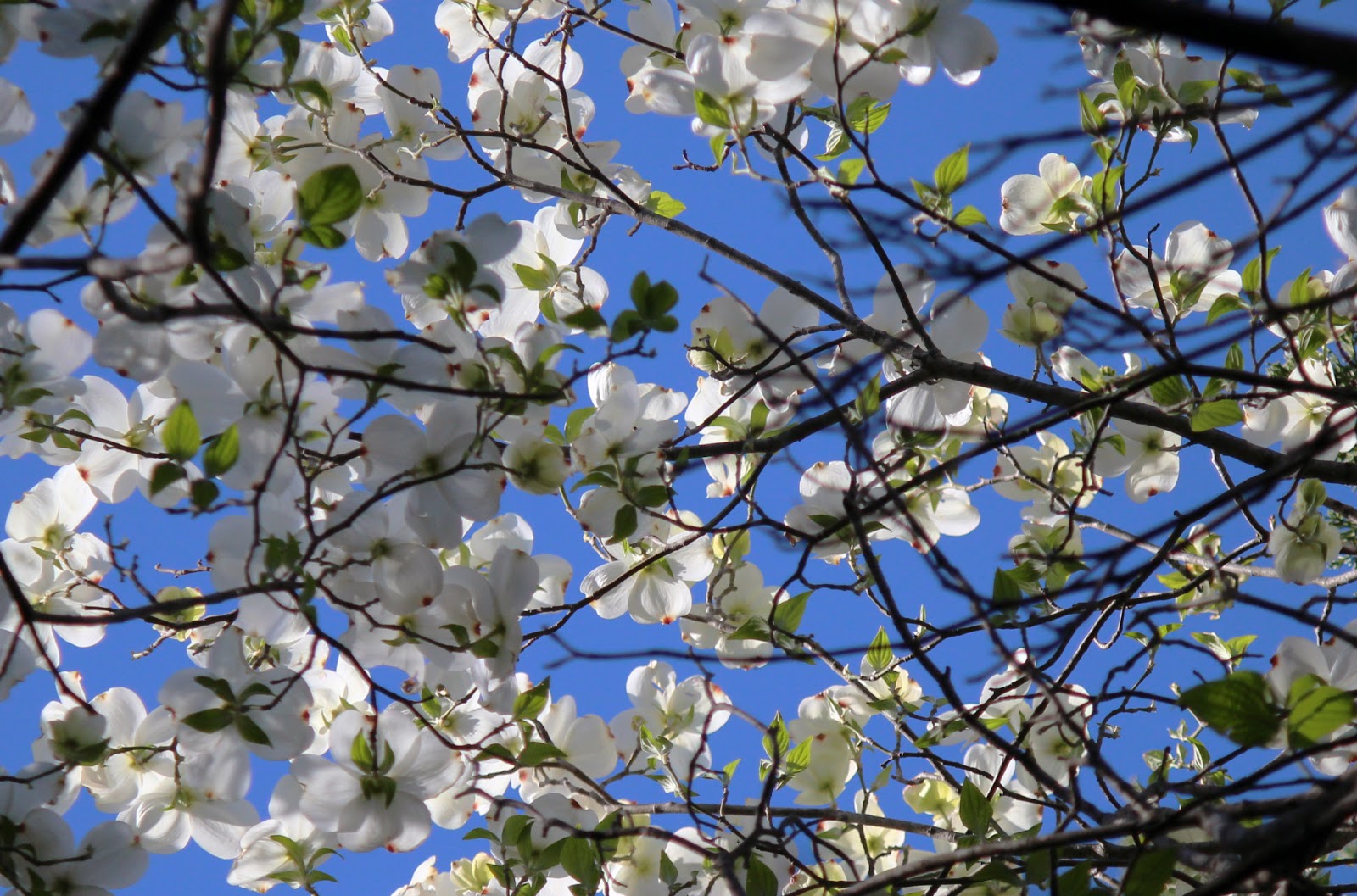
Climbing high in the tree tops of a century old Flowering Dogwood (Cornus florida) stand, Dogwood Canyon, Dallas County, Texas
Master Naturalist Bill Holston climbing a ladder into the Dogwoods
It sits three canyons, four creek crossings, two saddles, five hills and one pocket canyon away from the start of the hike. The refugium of dogwood trees hidden away for over a century. In an obscure canyon rarely visited, a place with no logical explanation of why these trees grow there we set our sights in the early pre-dawn light.

The pioneers that first settled this land called it the Cedar Mountains. A 100 million year old escarpment of limestone sitting on top of the Eagle Ford Shale running through Dallas County. This part of Texas is traditionally known as flat Blackland Prairie. A somewhat treeless native landscape with tall grasses and wildflowers. It attracted early settlers for the rich soils perfect for growing cotton and grain. The cedar ridges of southwest Dallas County are a stark contrast to that. Rolling limestone hills, steep ravines and cedar trees by the hundreds of thousands.


Cedar Ridge Preserve in the pre-dawn light of a Texas spring sunrise in the Black-capped Vireo Habitat Management Area
The following covers a traverse of three different parks along the cedar ridges here. Cedar Ridge Preserve, Cedar Mountain Preserve and Dogwood Canyon Audubon Center. A hike this distance is not for most. I think many would likely get their fill of the ups and downs in just one of these spots. Hiking all of them in the same morning is a real unique experience. Walking the headwaters of different creeks that eventually feed into Mountain Creek, noting the differing vegetation from one hill to the next all at once gives one a comprehensive look at what makes these hills tick.

Locations and addresses:
Cedar Ridge Preserve 7171 Mountain Creek Parkway
Website:Cedar Ridge Preserve
Trail Map: Cedar Ridge Preserve Trail Map

Cedar Mountain Preserve 1300 W. FM 1382
Website: Dallas County Cedar Mountain
Trail Map:  No official map available

Dogwood Canyon Audubon Center 1206 W FM 1382
Website:Dogwood Canyon Audubon Center
Trail Map: Dogwood Canyon Trail Map

No horses or mountain bikes allowed on those properties. Options for mountain biking in this area include the DORBA trail at Cedar Hill State Park and Big Cedar Wilderness. All five of these locations virtually interconnect in some way with trails. There should be roughly fifty miles of trails here across the five properties. Cedar Hill State Park and Dogwood Canyon both require an admission fee. Big Cedar is on private property and requires signed waivers.

Cedar Ridge Preserve -- The Old Dallas Nature Center

Cedar Ridge Preserve's pond in the early morning light
Some might know this spot as the Dallas Nature Center. Started by the generous donation of Dave Fox of Fox & Jacobs, this land was purchased in 1975 by Mr Fox for the Greenhills Experimental Center. The previous owner, the US ambassador to Japan, Clayton Wyman ran it as a small getaway ranch. One of the preserve's founders, Geoffrey Stanford lived on the property for a number of years.

In 1978 the foundation running the Greenhills Experimental Center changed the name to the Dallas Nature Center. It ran for a number of years on small budgets and was eventually consolidated into the Dallas County Open Space Program.

The Dallas Audubon Society has managed the now renamed Cedar Ridge Preserve since 2003. If you have not been there in awhile I think you will be pleased with the improvements to the property. Sitting on one of the highest points in Dallas at over 750 feet and with 600 some odd acres of terrain it has become a favorite spot of trail runners due to the looping trails and array of hills. Well made trails that flow with the contours make for good stabilized routes not prone to erosion.

Spring fed limestone creek where Austin Chalk meets the Eagle Ford Shale
From the highest of overlooks to the lowest of water crossings Cedar Ridge Preserve is an interesting place unto itself. One unique spot known for a small drop off water feature might catch the eye of those with a geology background (seen above). Here the limestone of the Austin Chalk meets the shale of the Eagle Ford formation that sits below it. This picturesque spot is a great place to explain the White Rock Escarpment. The uplift here is a north to south feature beginning in Dallas County near the Trinity River and following the western edge of the Austin Chalk. The shale erodes at a faster rate than the overlying limestone creating the eroded hills, creek ravines and as we'll see later remote hidden pockets of Texas few rarely see.
View from the observation platform at Cedar Ridge Preserve looking west. Joe Pool Lake in the far distance.
One of the high promontory points of Cedar Ridge features a two story observation deck with a commanding view of western Dallas County. From here on a clear day one can make out Joe Pool Lake, Six Flags Over Texas, Cowboys Stadium and Downtown Fort Worth.
Observation platform at Cedar Ridge Preserve


Yucca pallida  and Snake warning sign
From this vantage point one can see Cedar Hill State Park and over to the far left the ridges that comprise Cedar Mountain Preserve and Dogwood Canyon.

Hiking from the ridges down to the Cattail pond on the property one crosses a number of ecological zones that house a variety of plants. Juniper, cactus and yucca dominate the high ridges. A little further down one sees the Mexican Buckeye, Mexican Plum, Sugar Hackberry and a variety of oaks including the Shin Oak.
Bluebonnets in full bloom at Cedar Ridge Preserve

Leaving your vehicle behind at Cedar Ridge and crossing FM 1382 is pretty straightforward. An unlocked swing gate sits on the west side of the Cattail Pond fence line, a small gate designed for pedestrian traffic. Heading west by south crossing the ample median. Here Signal Hill in Cedar Hill comes into view. The tallest tower there is 1635 feet in height one of the tallest man made structures in the world. Native wildflowers carpet the hills here in the spring and make for a pleasant walk.
Hiking from Cedar Ridge Preserve to Cedar Mountain Preserve

Cedar Mountain Preserve Trail head
Cedar Mountain Preserve sits south of Cedar Hill State Park and North of Dogwood Canyon Audubon Center. Smaller that it's neighbors with a single trail that loops up to an overlook for a commanding view of the area. The flat low area near the trail head was once the site of a rental home most likely inhabited by 19th century sharecroppers. Archeology digs conducted here in the last several years point to 1860s-1900 when the home was occupied.

There was a parking lot for Cedar Mountain up until last year. In 2012 that parking lot access was combined into that of the Dogwood Canyon Audubon Center. Cedar Mountain is free to visit and unlike other nearby venues is open sunrise to sunset most of the year. If you want to see the sunset, this is the place to do it.


Dogwood Canyon Audubon Center
Under a canopy of dogwoods
If one were visiting Texas for the first time or hosting house guests from afar wanting to see a Texas landscape, this is the place to go. Something strange happened up in the hidden canyons of this place. An ecological crossroads of sorts where all the different parts of the Lone Star State meet. The three hundred acres of scrabble canyons well represent Texas. From East Texas the dogwoods. From the north come the Trout Lilies and prairie flowers. From the West come the yucca and cactus. From the south the buckeye and junipers. From all points of the compass birds converge including the Black Capped Vireo, an endangered species.

Dogwood Canyon Audubon Center
Just off FM1382 the visitor center for Dogwood Canyon sits on the site of an old transmission tower footprint that is incorporated into the new building site. Opened in September of 2011 the visitor center serves as an education building and information center.


Trail junction behind the Visitor Center
Couple of options in regards to the trails here. A lower trail, the Canyon Floor Trail sticks to a small tributary of Penn Creek that runs west to east through the canyon and out towards FM 1382. The ADA compliant trail affords easy access for those looking for something flat and without obstacles.

The other trail, the one of most interest to those reading this will be the West Loop/ West Rim Trail. This trail gradually climbs away from the canyon floor up a series of switchbacks to the canyon rim then follows that rim around to the west and north affording great views of Joe Pool Lake and points west in Tarrant County.


The forested canyon floor of Dogwood Canyon near the visitor center
The creek running through here is named Penn Creek. Named for the original pioneer to first settle this area John Anderson Penn. He arrived in Dallas County in the mid 1850s with a wife and two sons. It's believed he was first drawn to the area from Illinois by word of his California Gold Rush 49er friend Crawford Trees who owned large acreage in Dallas County. One of Penn's sons, John Wesley Penn built his farm here, with 1859 as the founding date of the farm according to Texas Parks and Wildlife. The farm is still intact inside Cedar Hill State Park and serves as an outdoor museum to a time gone by. Many of the barns, homes and out buildings are still there.

John Wesley Penn had a thriving farm here for decades on Mountain Creek and the creek tributaries bearing his own name. He grew various crops in the lower areas, cut the meadows for hay and grazed cattle on the slopes to some extent. Mr Penn died at the hands of a rattlesnake, per the obituary below:

An Old Settler Dies From the Poisonous Effects of a Rattlesnake Bite.  

Mr. John W. Penn, an old resident and respected farmer living on the mountain near Cedar Hill, in Dallas county, was bit by a rattle snake last Friday evening, from the effects of which, he died early Saturday morning. The fangs of the reptile were buried deep on the back of the hand, and as soon as he was bit, Mr. Penn declared he would never survive. His prediction was gradually verified as he poison settled deeper in his system and about midnight, he lost consciousness and became a raving maniac, four holding him in bed until death relieved his terrible suffering early Saturday morning. The snake struck the unfortunate man while he was in his field stooping over to pick up a rake from a rank growth of weeds. Mr. Penn had been living on the place twenty-five years, and he stated after he was bit that it was the largest snake he ever saw. He called to his son who was plowing in another portion of the field, who conveyed his father home. Stimulants and every remedy available were administered without effect. After its deadly work, the snake escaped in the high weeds.   - June 25, 1888, Dallas Daily Herald

The rattlesnakes still grow large here. Sightings of very large rattlesnakes on the DORBA Trail at Cedar Hill State Park are very common. One of the more infamous photos that circulate the internet of a rattlesnake among bluebonnets was taken at Cedar Hill.

When Penn started his farm here, the hills were probably more of an open grass environment that kept trees and understory in check through infrequent wildfires.  While it's hard to say or call anything here man made, the large number of trees here now are a climax ecosystem due to lack of fire.
Switchback up the canyon
Climbing up the canyon here, one can start to see things those old wildfires never touched. Maybe the fanning flames of wildfire never made it inside this canyon. Hard to tell. In the spring, with the canyon in full bloom you start seeing trees that belong much further south, like the Mexican Buckeye.
Mexican Buckeye Ungnadia speciosa on the West Rim Trail
It would be fair to say that other nearby hills and canyons have Mexican Buckeye. Dogwood Canyon just has much more of it. That's the theme here. More of everything. Not just variety but a profusion of population.
Trout Lily Erythronium albidum on the canyon floor
Trout lilies are in great numbers here, some places they carpet the undulating terrain as if they were sown like winter wheat.  This visit was too early for the hexalectris orchids that appear in May, they are here too. The trout lily and the hexalectris orchid are two plant species in the Dallas area for which man had no hand in planting. They also serve as telltales of land that has never seen a plow or development. The further back in the canyon you go the better it gets.

Man has been up here. Who knows when. Maybe half a century ago, most likely much longer than that, someone built a ramshackle cabin of a place way up on the slopes of the ridge. Far away from the world. This was long before any road or highway existed in the area, just a little country road to Cedar Hill.

The Old Cabin

The old cabin sits just off the main trail overlooking the upper reaches of Dogwood Canyon. Built of cedar and corrugated metal siding the untouched building here is a great look into the past. Unapologetically out of fashion, a building in such state takes on a life of it's own.

View of the canyon near the cabin
Interior of the "Old Cabin" at Dogwood Canyon Audubon Center
The remote nature of the cabin, the rustic looks of something only time can wear on a structure and the unique construction make this one cool little place worth visiting. The interior suggests the current structure is a rebuild of a previous building. The joints, eaves and framing suggest a similar building once sat nearby and reconstituted into what we see today. Turn of the last century with additions maybe in the Depression era and post World War II. An old school desk, oil drum stove and a sleeping loft dominate the interior. It would be interesting to learn who used this. A retreat and escape of some kind for sure. Lacking the hallmarks of a tack shed, feed storage room or rental house this was a home away from it all for some lucky soul. Fortress of solitude, getaway, take your pick.

The Hurt Family
David Hurt at Dogwood Canyon April 2013
This would be a good point to mention the family whose donation served as the nucleus for Dogwood Canyon, David and Kim Hurt. They purchased a tract of the canyon here with intentions of building a dream home nestled in the high canyon. In 1999 on a hike in the canyon, David Hurt discovered a number of the special qualities of the woods here, including the special dogwood grove.

Through their special donation, the land here was preserved and additional tracts purchased to mushroom into 200+ acres. Parcel by parcel the jigsaw pieces of land gel together to form a great sanctuary.

It would be hard to find fault in someone who wanted to keep a place like this to themselves. Sharing it with the public and working towards preserving it is really an exceptional note of altruism.

Finding The Dogwoods

I have no idea how David Hurt found the dogwoods. They are not on a trail. Not up the bank of a creek. They sit in some mysterious place that is hard to describe.

Leaving the marked trail even Master Naturalist Bill Holston had some reservation about finding the spot. He had been there before but the route to get there involves a great bit of sleuthing.

Ecologists call the place we are head a Refugium. A quirk of the natural world where time and history bypass a place leaving old stands of plants and animals to live in a micro environment. A location of an isolated or relict population of a once widespread animal or plant species. Great Texas examples are the Lost Maples in the Hill Country and Texas Blind Salamanders in San Marcos.

Heading down slope and into the canyon the dramatic difference in the plants becomes apparent. Mushrooms, thick mosses and trout lilies abound.


Penn Creek tributary high in the canyon
Headed down a couple draws and finally reaching a small chalk creek the bright morning sun barely penetrates down here. Up two more box draws and a number of blown down juniper one second guesses if they are on the right path. Then you see them. The trees for which the canyon gets the name.

Flowering Dogwood (Cornus florida)
The Flowering Dogwood (Cornus florida) is best known for the white petal-like flat bracts that give the appearance of a single large flower. The real flower of the dogwood are the yellowish green compacted clusters in the center.

Flowering dogwoods are small trees usually growing to 15-30 feet in height and are known as an understory tree in most Southern forests. The trees in Dogwood Canyon fit that bill. The stand of trees sit on somewhat flat ground at the head of a box canyon draw of sorts growing among leafy detritus of nearby oaks.

The odd bedfellow to the mix are the alkaline loving juniper that grow side by side along the dogwoods. Really strange to see as the two typically prefer different soils in which to thrive.

Difficult to explain how the trees came to thrive in such an area. Some say these trees are over a century old. Deep in a far away canyon with no buildings or farms existing in the nearby vicinity during any time in the past one wonders if humans or a true marooned plant species exist here. Lots of good questions but no good answers pointing any direction. Shrug your shoulders and just accept what you are seeing is unique. There is no other place like it.

The closest native stand of Flowering Dogwoods sit some distance east in Van Zandt county. A traditional understory tree of acidic soils the head scratching commences wondering how the trees not only came to be here but seem to thrive in an alkaline soil.


The best way to see these large dogwoods is to climb up into their canopy. Using a large ladder supported on the trunk of a juniper tree we climbed high into the branches.

The view from above is exceptional. Looking down at the forest below and the far horizon in the distance one gains a new perspective for the size of the trees here.

Looking down on the forest floor far below
Most of the photos here were taken up in the canopy 15-20 feet or so climbing the ladder


A real under the radar gem of a place. I would have a hard time finding it again as no trail exists to the spot. I think plans are in the works to open up some kind of more formal trail to the spot. If that never happens I think that would be a cool thing.
West Rim Trail view of Joe Pool Lake
Hummingbird in a Shin Oak at Dogwood Canyon
 Few places combine so many species of birds and plants like the cedar ridges down in Southern Dallas. Hard pressed to find something with more.

Our hike back saw more birds than the walk in. Hummingbirds fresh from Mexico, honeybees abuzz among the bluebonnets and buckeyes. A real eye opener to a place so many people have never been.

Cedar Ridge Preserve for miles of hiking trails, Cedar Mountain for great free sunsets and Dogwood Canyon for an overdose on what Texas is all about.